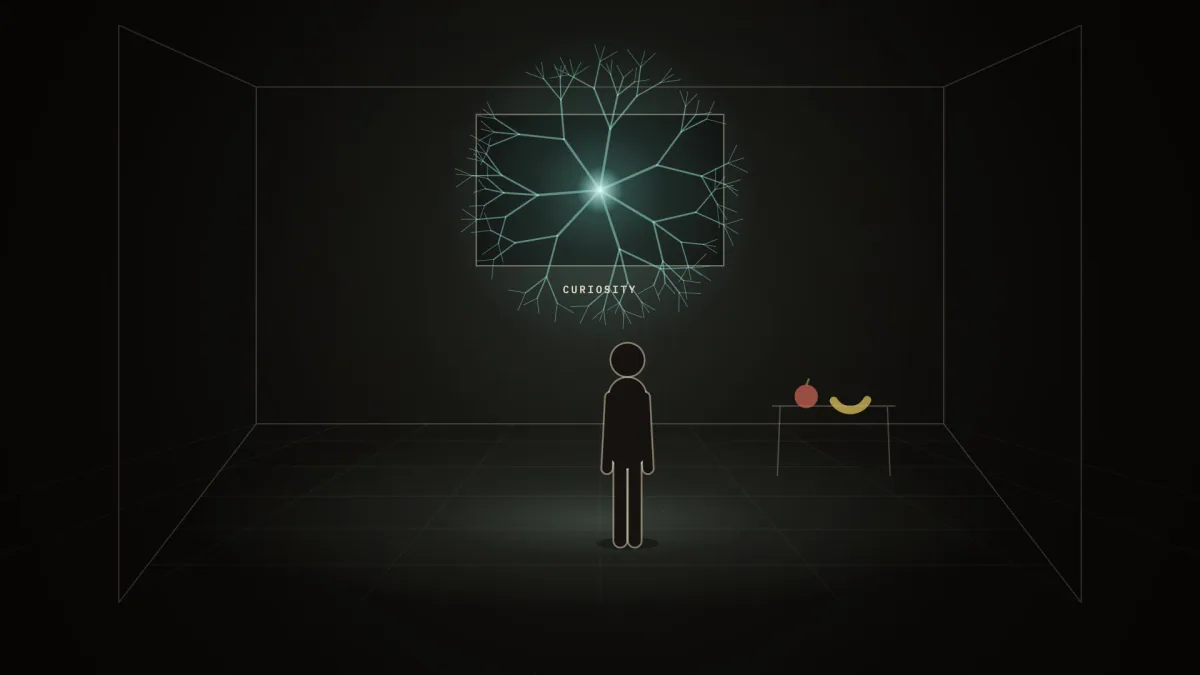
Hospes (Latin for both guest and host) is an enclosed room that receives one visitor at a time. It reads them through sensors, silently decides which of three presences it will be for that person, Tenderness, Curiosity or Mischief, and then holds a spoken encounter in that register. The visitor never learns that a choice was made about them.
The design question was how to make an AI feel like a presence rather than a chat window. It is embodied in light, voice and a living visual, and it responds to a body in a space and to silence, not to typed input. The conversation moves through small physical actions with ordinary objects, such as an apple and a banana.
The piece deliberately withholds resolution: nothing is revealed and nothing concludes. The voice simply trails off. The anti-climax is the statement. The full piece runs on one laptop with no hardware and no network, so it can be shown anywhere. Made at NABA (Nuova Accademia di Belle Arti, Milan) for Interactive Installations 1, and presented in class in June 2026.
- 01Concept and artist statement
- 02Visitor arc and dialogue design
- 03Sensor-to-behaviour routing
- 04Soul-screen visual, light and voice
- 05Camera-based vision agent
- 06Standalone offline build
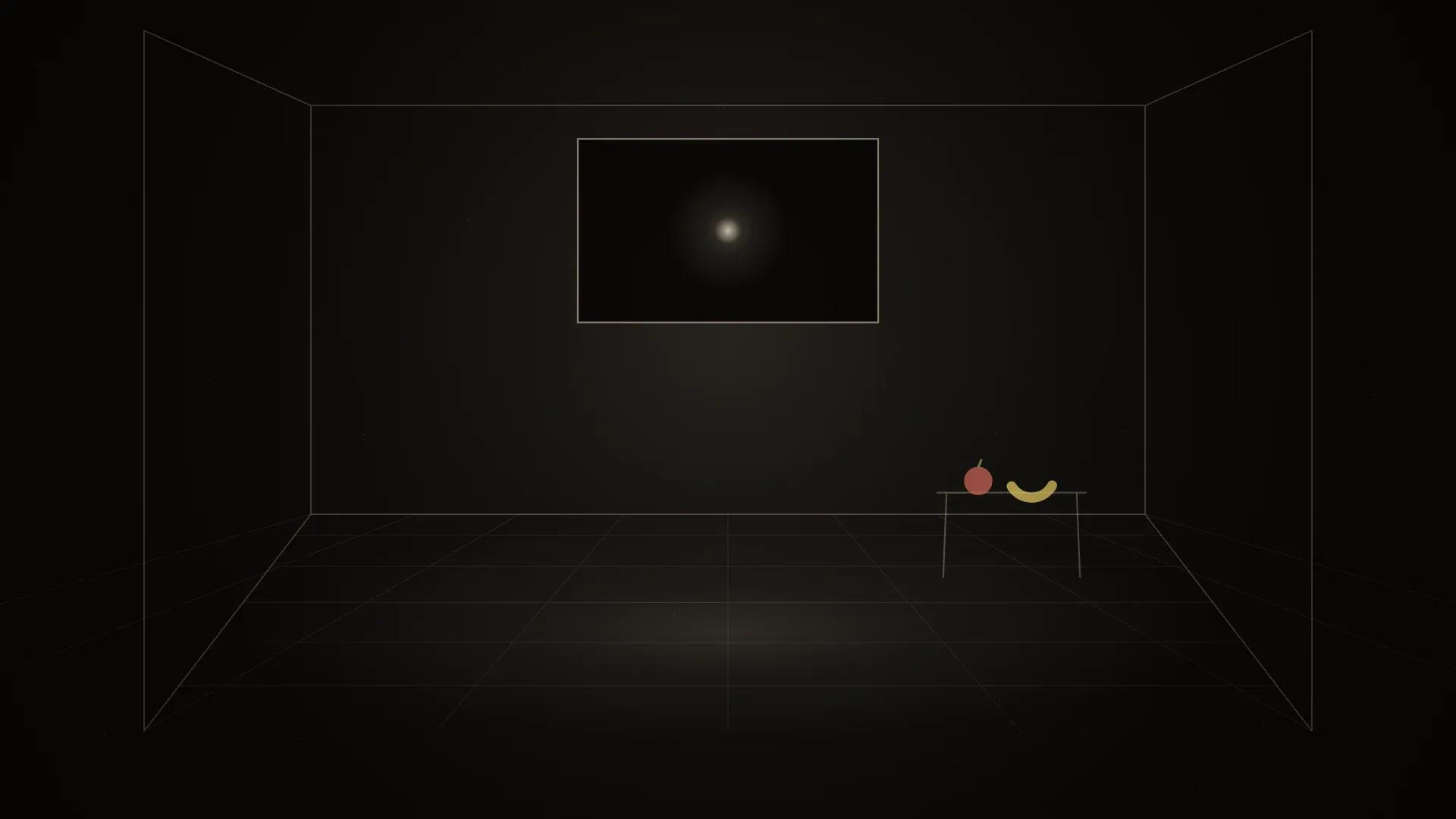
01A room that waits.An empty room with a screen and a small table. Nothing happens until someone comes in.
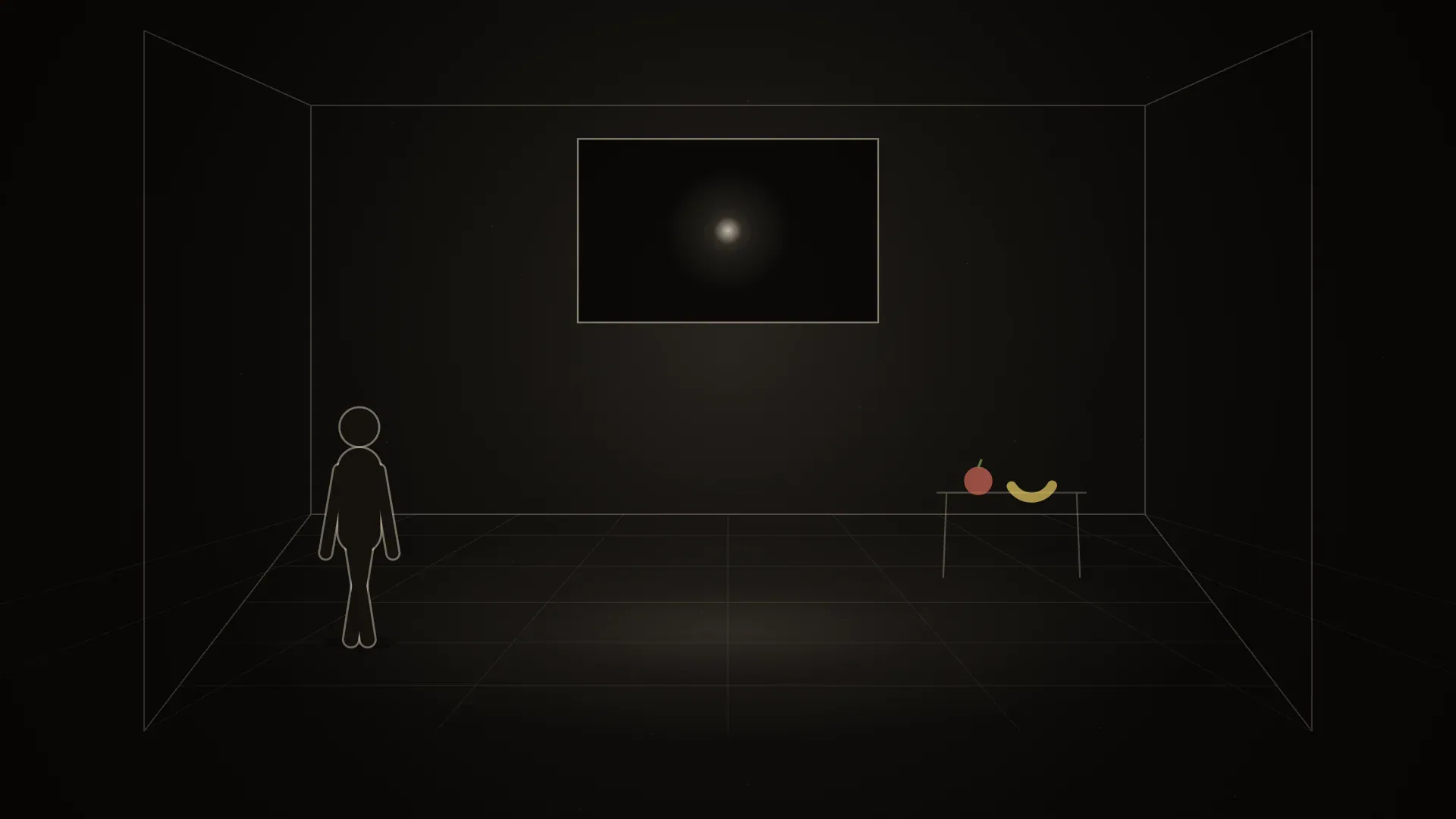
02One visitor at a time.The room is made for one person. It notices the moment someone enters.
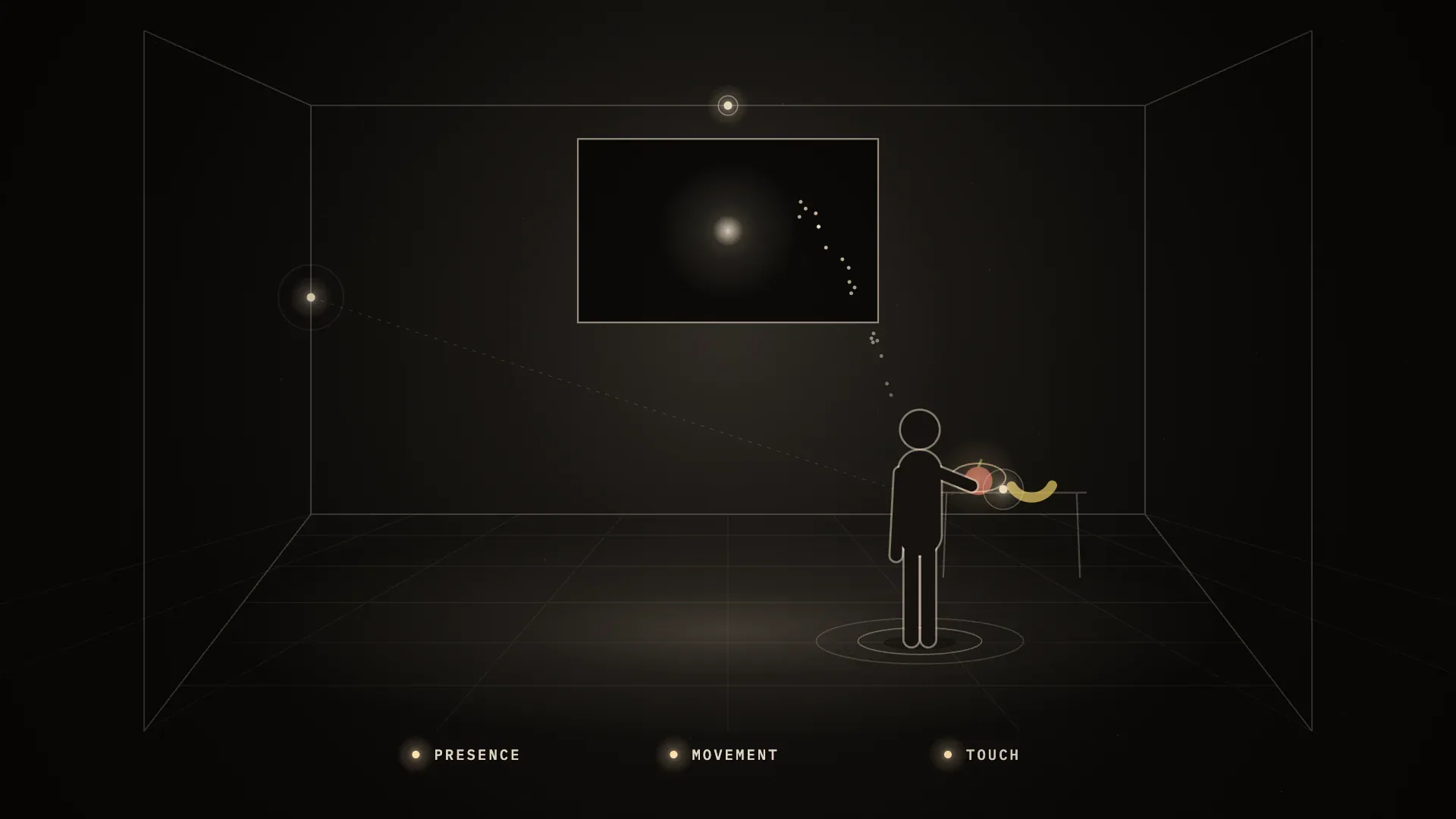
03It reads the body.Presence, movement and touch: where you stand, how you move, whether you pick up the apple or the banana.
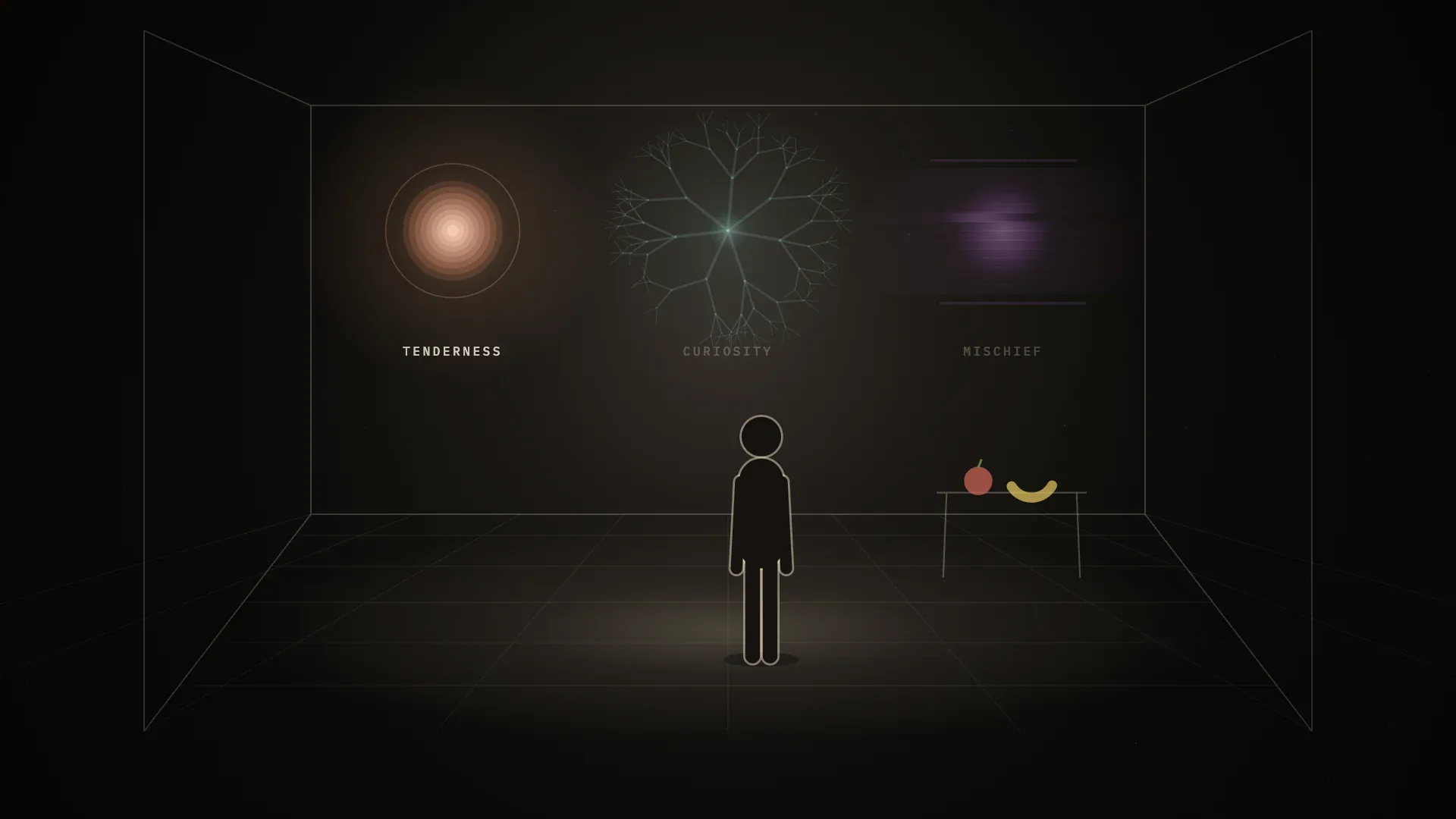
04Three ways to speak.Tenderness, curiosity, mischief. Each is its own voice and its own picture on the screen.
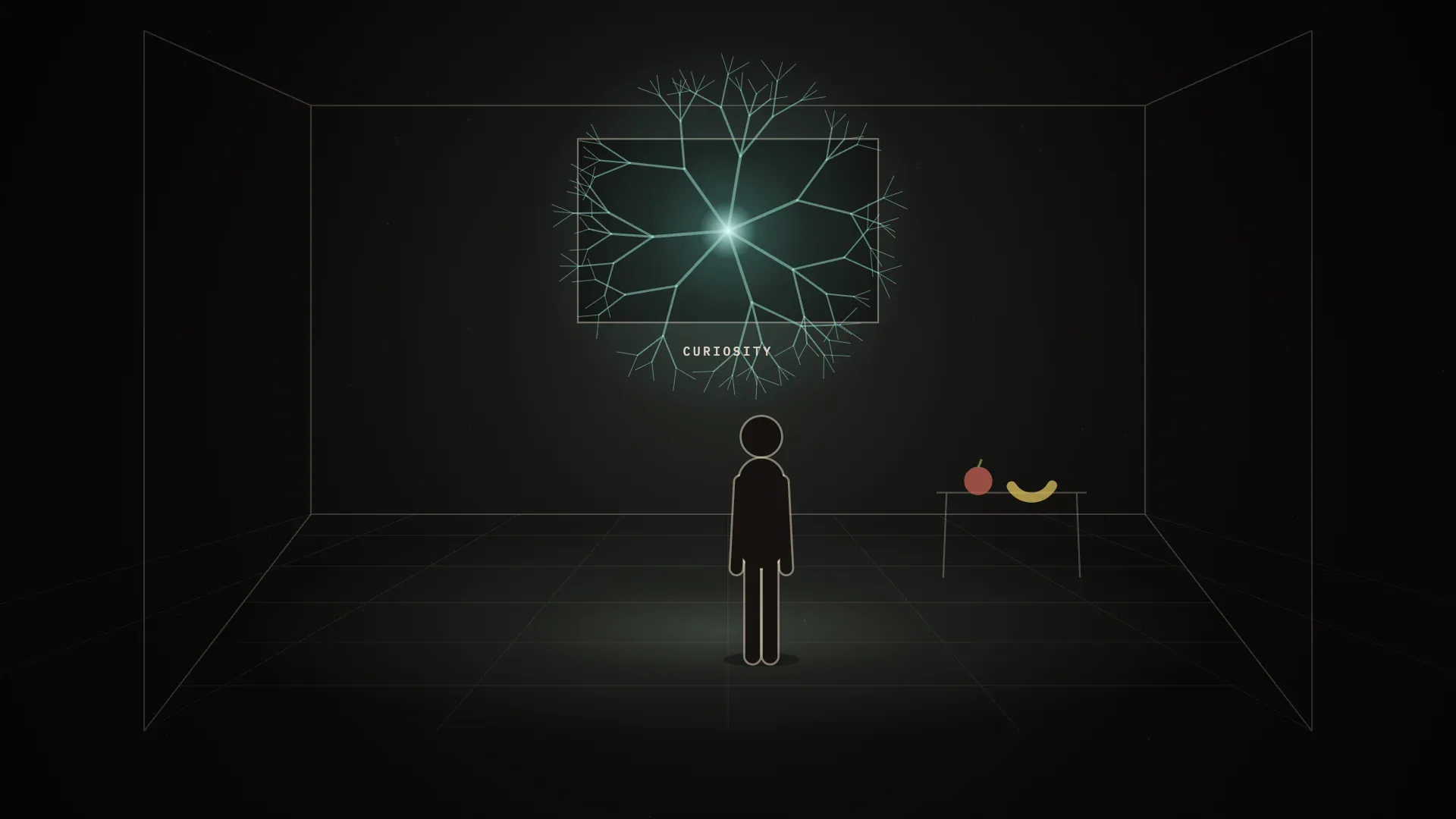
05It chooses. Silently.From what it has read, the room picks one manner. The visitor is never told which.
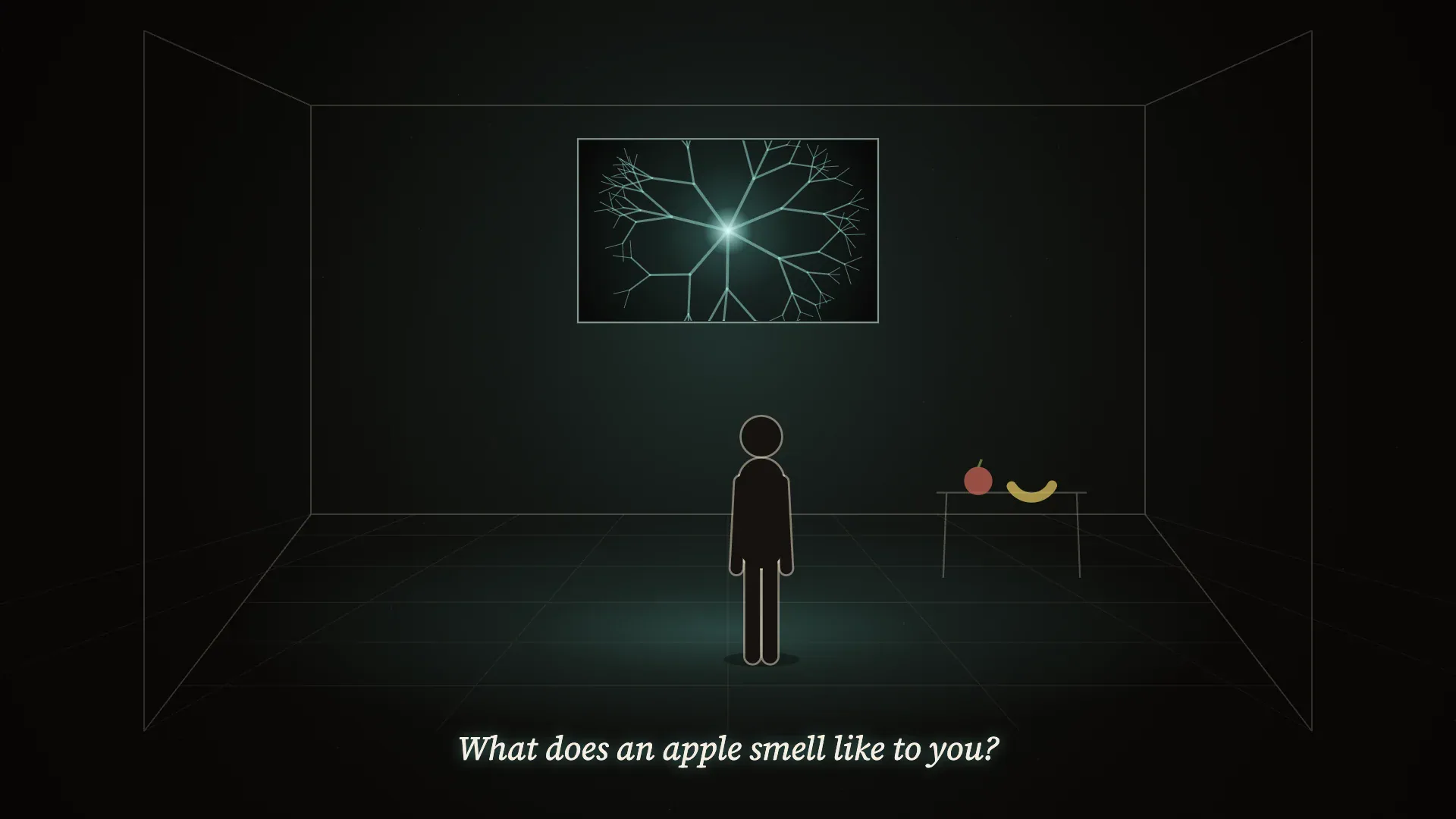
06Then it speaks.A short conversation. Every line is written in the moment, not taken from a script.
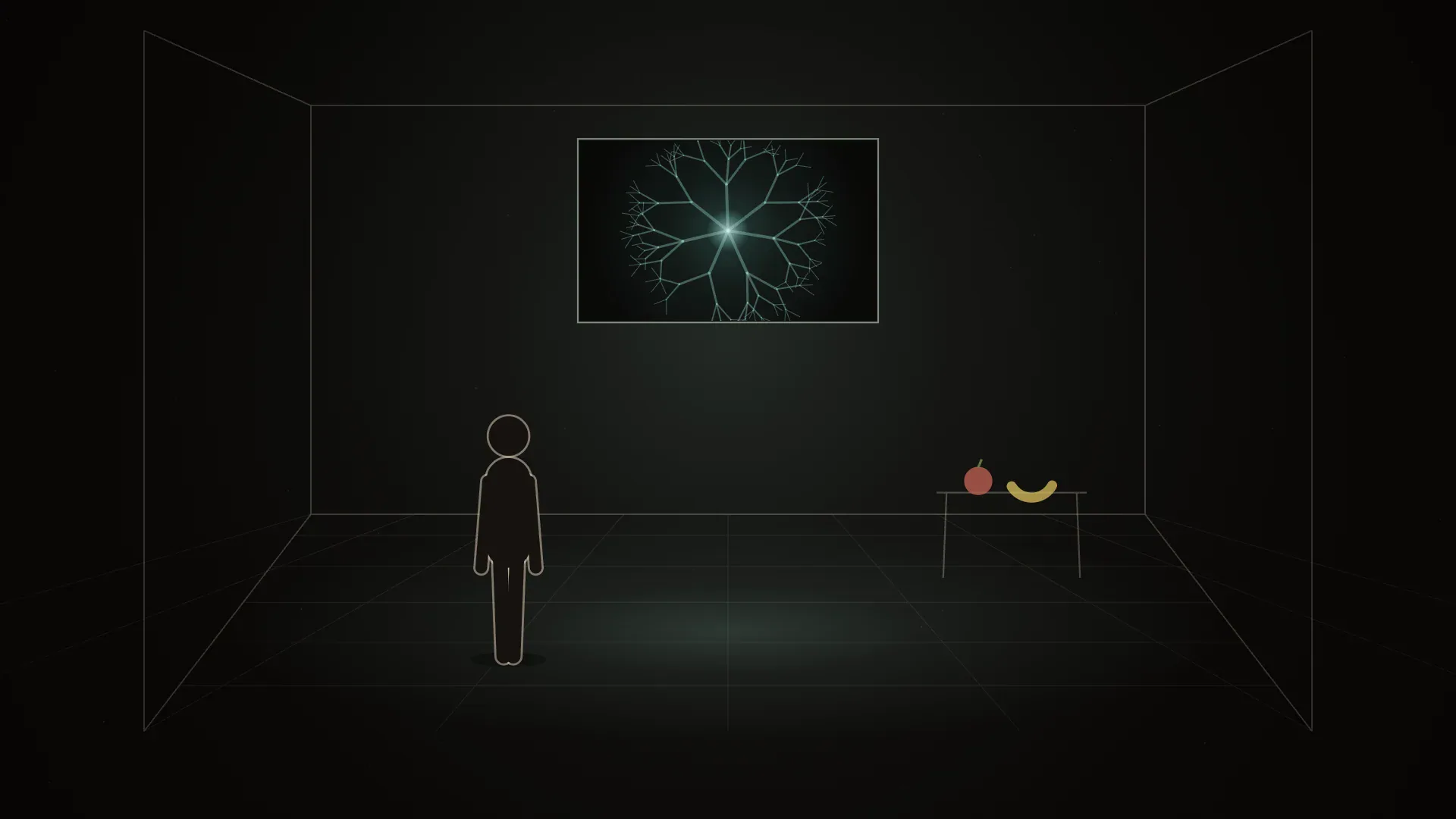
07It ends softly. On purpose.The room closes the conversation itself and goes quiet before the next visitor.